

1200W Mango Power Plug-In Solar Kit Complete Guide
The 1200W Mango Power kit is a plug-in solar system: four ground-mount solar panels that connect to a standard outdoor outlet and start offsetting your home's daytime electricity use. No roof work, no permanent wiring. This guide is the detailed companion to our product page: what is in the box, how much power to expect, whether you want the optional Smart Gateway Lite, what your home needs before installation, and the certifications and warranty behind it.
In this guide:
- Bottom line: who is this kit for?
- Choose your kit: with or without the Smart Gateway Lite
- What's included and technical specifications
- How much electricity (and money) could it save?
- Is your home ready? Safe setup and permissions
- Certifications, warranty and limitations
- Frequently Asked Questions
- The next step
Bottom line: who is this kit for?
This kit is for homeowners and renters who have a sunny spot at ground level, a backyard, patio, side yard, balcony or carport, and want to buy less electricity from the grid without a rooftop installation.
What it does: it generates solar power during the day and feeds it into your home through a standard outdoor outlet. Your home uses that solar power first, so you draw less from the grid while the sun is shining.
What it does not do: it is not whole-home power, and it is not backup power for outages. There is no battery in this kit. When the grid goes down, the system shuts off with it (that is a required safety feature, explained below). It offsets a portion of daytime electricity use rather than replacing your utility service.
Whether it is a fit depends on three things: a suitable sunny space, a suitable outdoor outlet and circuit, and your state, local and utility requirements. Our state-by-state guide covers where plug-in solar stands legally.
Choose your kit: with or without the Smart Gateway Lite

Both kit variants include the same four panels, four microinverters, stands and connection cable. The difference is the Smart Gateway Lite, a small meter that installs at your electrical panel.
Why it exists: when your home is using less power than the panels are producing, the extra solar electricity flows backward through your meter to the grid. That is called export. Some older utility meters are not designed to read energy produced behind the meter; they can count that exported power as if you consumed it, which means you are being charged instead of saving money. The gateway measures the flow at your panel and tells the microinverters to dial output down so production matches what your home is actually using. This is called zero-export or anti-backflow control, and the gateway responds in about a quarter of a second.
What the gateway adds, beyond export control:
- Whole-home energy monitoring in the Mango Power app: solar production, home consumption and grid flow, measured to ±0.5% accuracy
- Automatic detection of current transformer (CT) and phase wiring errors during setup
What to know before choosing it:
- The gateway mounts at your main electrical panel, and the manufacturer requires installation by a qualified electrician. Budget for that visit.
- It is an indoor-rated device (IP20) and connects to your home's 2.4GHz Wi-Fi.
- Zero export is a choice about meter compatibility and control, not a legal requirement in the plug-in solar state laws passed so far.
Our short guidance: if you know (or suspect) your home has an older meter that could count exported solar as consumption, or you want whole-home monitoring and tight control over export, choose the gateway variant. If your utility setup handles two-way power flow cleanly and you mainly want the panels working, the standard kit keeps things simpler. If you are not sure which meter you have, your utility can tell you.
What's included and technical specifications

The kit ships as four boxes with everything needed for a ground-level setup:
- Four 300W solar panels
- Four Mango Power S Pro microinverters, factory-configured with PIPV firmware (120V / 280W output each)
- Four panel stands for ground mounting
- One PIPV 4-in-1 connection cable that links the four panel-and-microinverter pairs into a single plug-in string with a standard US plug
- Smart Gateway Lite with current transformers (gateway variant only)
- Mango Power app access for monitoring
Key specifications, per the manufacturer's US datasheet (Mango Power S PIPV System Datasheet For US):
| Kit solar capacity (DC) | 1,200W: four 300W panels |
|---|---|
| Maximum AC output | 1,120W: four 280W microinverters |
| Panel rating (each) | 300W at 36V / 8.39A (standard test conditions) |
| Microinverter output (each) | 280VA nominal, 2.33A maximum continuous |
| Output voltage / frequency | 120V (L-N), 90-160V range / 60Hz |
| MPPT voltage range | 16-60V (peak power 36-55V), 22V start-up |
| CEC efficiency | 97% |
| Panel dimensions | 1675 x 880 x 30mm (about 5.5 x 2.9 ft) |
| Weight per unit (panel + stand + microinverter) | 19.15kg (about 42 lbs) |
| Weather rating | NEMA Type 6P / IP68 |
| Operating temperature | -40C to +65C (-40F to +149F) |
| Cooling / noise | Natural convection, no fan; under 25dB |
| Electrical protection class | Class II double-insulated |
| Connection cable | 14 AWG (14AWG-2C-TC ER), 4 AC connectors per cable, 1-15P US plug; length listed as 5/3 (extension cable length) |
| Communication | Wi-Fi Mesh (2.4GHz) |
| Maximum altitude | 4,000m (13,123 ft) |
| Grid compliance | CA Rule 21 (UL 1741-SB), UL 1741 / IEEE 1547, UL 62109-1, FCC Part 15 Class B; UL Listed rapid-shutdown equipment (NEC 690.12) |
About the cable: The 4-in-1 AC trunk cable links all four microinverters into one string that ends in a standard US plug (14 AWG conductors, 1-15P plug), one AC connector per microinverter, per the installation guide. The US datasheet lists the cable length as "5/3 (extension cable length)": a 5-meter and a 3-meter section. Confirm the cable can run between your sunniest spot and your outlet before ordering.
About the "500W" on the microinverter casing: The Mango Power S Pro hardware is rated 240V / 500W on its nameplate. For this US plug-in kit, the factory firmware configures each unit for 120V / 280W output, which is what makes the kit suitable for a standard household outlet. The 500W nameplate is the hardware's maximum in its native configuration, not what this kit delivers. The Mango Power technical support team may be able to configure your microinverter firmware to utilize the full 500W.
How much electricity (and money) could it save?
Watts versus kilowatt-hours: Watts (W) are power at an instant; kilowatt-hours (kWh) are energy over time, and that is what your utility bills you for. See our glossary for plug-in solar term definitions.
Why "1200W" and "1120W" are both true, and why the difference matters: The four panels are rated 300W each under standard test conditions (STC: 1,000 W/m2 of sunlight, AM1.5 spectrum, cell temperature 25°C / 77°F), so the kit has 1,200W of solar capacity on the DC (panel) side. Each microinverter is configured to deliver up to 280W of AC power, so the most power the kit can feed into your home at any instant is 1,120W AC. When you ask "how much power will my home actually get," 1,120W is the ceiling; 1,200W is the panel capacity behind it.
Will the inverter limit cost you energy? Sometimes, briefly. Panels rarely produce their full rated wattage; real cells on a sunny day typically run hotter than the 25°C (77°F) test temperature, and heat lowers output, so actual production usually lands below the rating. But when panel output minus real-world losses would exceed 1,120W, mostly around bright, clear middays, and more so in cooler weather when panels run more efficiently, the microinverters hold output at 1,120W and the surplus is simply not harvested. This is called clipping. Because this kit's oversizing is small (1,200W of panels against 1,120W of inverters, a ratio of about 1.07), clipping should be occasional and short-lived rather than a daily haircut. (Note: we have not measured this kit's clipping; this follows from how clipping scales with the DC-to-AC ratio. Installers commonly oversize panels relative to inverters on purpose, for the reason in the next paragraph.)
The payoff of that oversizing: With more panel than inverter, the kit reaches and holds its 1,120W ceiling earlier in the morning, later into the afternoon, and on bright-but-hazy days. Over a full day it should produce more energy than a kit with only 1,120W of panels on the same inverters, even after clipping; the small midday sacrifice buys a longer, fuller production curve. That tradeoff here is deliberate.
A simple way to estimate daily production: multiply 1.2kW by your location's peak sun hours. At 5 peak sun hours, that is about 6kWh per day before real-world losses; temperature, wiring, conversion and occasional clipping together typically take off roughly 10-15%. Sunshine and shade are the biggest variables: a panel in partial shade produces less, though one shaded panel does not drag down the other three, because each panel has its own microinverter.
A worked example:
- Location: Mid-Atlantic yard, about 4.5 peak sun hours on an average day, south-facing tilt, no significant shade
- Production: 1.2kW x 4.5 hours = 5.4kWh per day, minus about 15% real-world losses = about 4.6kWh per day, or about 138kWh per month
-
Savings: only the solar your home uses at the moment it is generated offsets your bill. If your home uses most of that daytime production, 138kWh at the US average rate of $0.183/kWh is about $25 per month or $303 per year. That's about 16% of the average US electric bill.
The same math at different sun and rate levels, with real state examples:
- Lower sun, lower rate (Washington): about 107kWh/month at $0.147/kWh = about $16/month or $189 per year (3.5 peak sun hours). That's about 11% of Washington's average electric bill.
- Higher sun, higher rate (California): about 184kWh/month at $0.336/kWh = about $62/month or $742 per year (6 peak sun hours). That's about 37% of California's average electric bill.
State rates and average bills from ElectricityPlans' state-by-state EIA data (July 2026).
For reference, the manufacturer's own estimate of $420 per year assumes 5.5 peak sun hours and $0.18/kWh, which is inside the range above. Your number depends on your sun, your rate (check your bill), your orientation and shading, and how much of the daytime production your home actually uses. A home that is empty all day with low consumption will leave more solar unused; with zero-export control active, the gateway will intentionally reduce production to match, which protects you from meter problems. Keep in mind these are modeled estimates, and actual output varies based on several factors.
Is your home ready? Safe setup and permissions
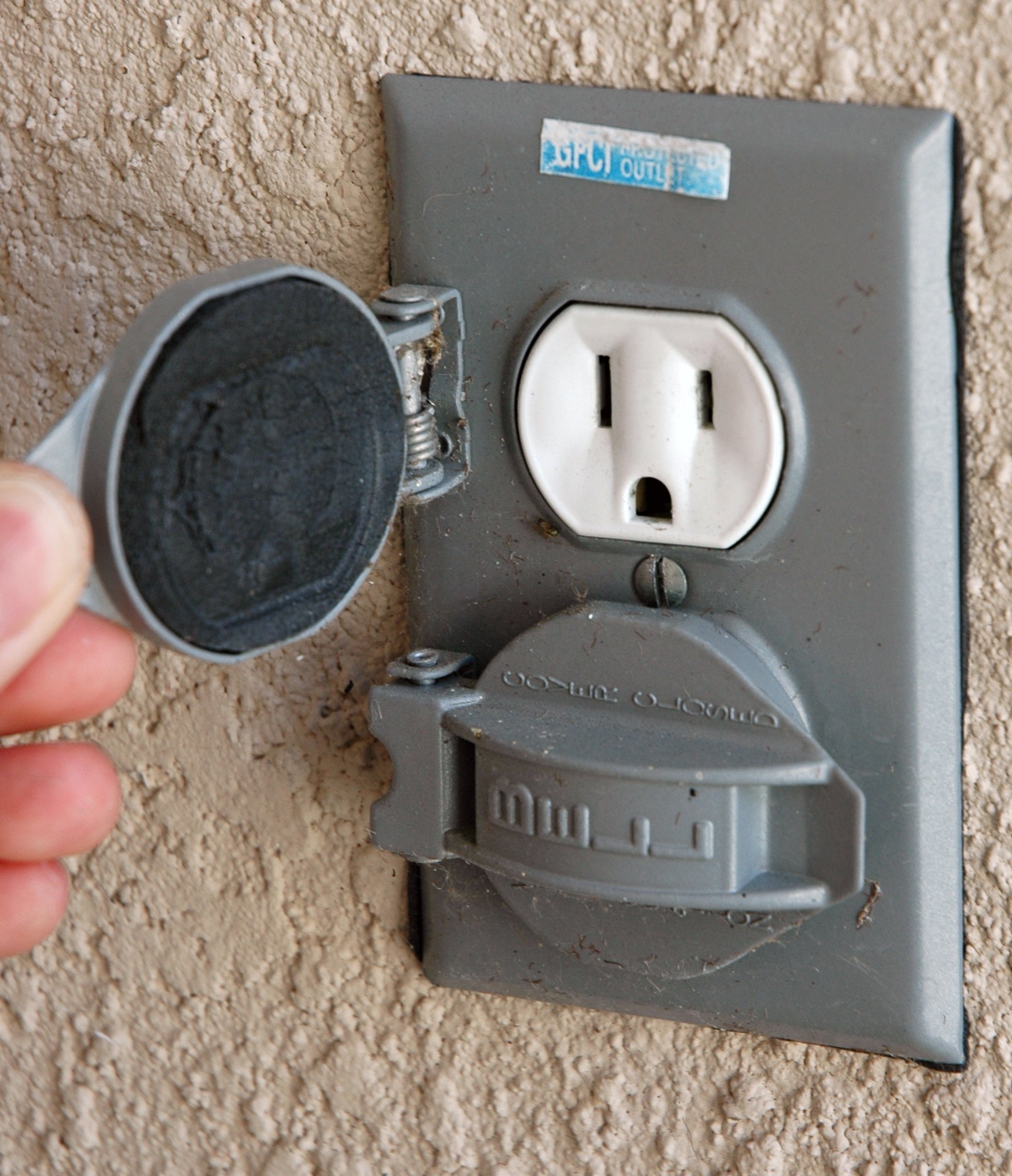
Run through this checklist before ordering:
- A sunny location with space for four ground-mounted panels (each panel is about 5.5 x 2.9 feet), secured against wind and tipping
- An outdoor outlet in good condition. We recommend a Class A GFCI-protected outlet: our guide explains why and how to check.
- A dedicated circuit for the kit, so its output does not share a circuit with other appliances. What that means and how to check yours.
- Permission where relevant: landlord or HOA approval for renters and shared properties
- State, local and utility requirements for plug-in solar where you live. Rules differ: Utah, for example, exempts qualifying plug-in systems from interconnection approval, while other states expect notification or approval. Check our state guide and your utility before you install.

Setup at a high level: Assemble the stands, mount the panels, connect each panel to its microinverter, connect the microinverters to the 4-in-1 cable, and plug into the outlet. The manufacturer rates physical setup at minutes rather than hours. This article is not a substitute for the installation instructions that ship with the kit. Follow the included manuals, and treat anything involving your electrical panel as electrician work.
If you choose the gateway variant: The Smart Gateway Lite mounts at your main electrical panel. Its current transformers clamp onto the two incoming service lines (L1 and L2) below the main breaker, and a sampling cable connects to the L1 and L2 breakers. The manufacturer's manual requires that a qualified electrician perform this grid-connection work. After the hardware is in, setup moves to the Mango Power app: add the device over Bluetooth, give it your 2.4GHz Wi-Fi details, and bind it in the app. The gateway auto-detects CT and phase wiring errors, but note the difference between installed hardware and correctly commissioned export control; the app is where you confirm the system is actually holding zero export.
If you did not choose the gateway: Download the Mango Power app, register, bind the microinverters and connect them to Wi-Fi to see production in real time.
Certifications, warranty and limitations
Certifications: what is covered, and what is not. The microinverters in this kit carry third-party safety recognition, including UL 3700 component recognition (the standard written specifically for interactive plug-in photovoltaic equipment) issued through Intertek in September 2026, and grid-interconnection listings including CA Rule 21 (UL 1741-SB), UL 1741 / IEEE 1547, UL 62109-1 and FCC Part 15 Class B. The microinverter is also UL Listed as rapid-shutdown equipment under NEC 690.12. The datasheet above lists the full compliance set.
Note that these are component-level recognitions for the microinverters, not a certification of the complete kit as delivered, and no one should claim otherwise. For what certification labels mean in plug-in solar generally, see our explainer.
Warranty, by component:
| Component | Manufacturer warranty term | Notes |
|---|---|---|
| Solar panels | 25 years | Limited warranty |
| Microinverters | 25 years | Limited warranty |
| PIPV 4-in-1 cable kit | 3 years | Limited warranty |
| Smart Gateway Lite | 3 years |
Warranty terms, exclusions and claim routes are set out in the manufacturer's warranty documents.
Safety limitations worth knowing: the microinverters include certified anti-islanding protection. If you switch off the breaker, unplug the kit, or the grid goes down, the system stops exporting power within moments and only resumes after it confirms the grid is back within specification. It cannot energize a dead circuit, which is exactly what utility line workers rely on. It also means the kit gives you no power during an outage.
Frequently Asked Questions
Will this kit cover my whole electric bill?
For most homes, no. Any kit this size that promises that is overselling. It offsets a portion of daytime use. The worked example above shows what a realistic slice looks like; homes with high daytime consumption (air conditioning, home office, EV charging during the day) will use more of what it makes.
What happens on cloudy days or in shade?
Production drops with cloud cover, roughly in proportion to the light lost. Shade on one panel does not reduce the others; each panel has its own microinverter and operates independently. If one panel or microinverter ever fails, the rest of the system keeps working and only that unit needs attention.
How much space does it need?
Each panel is about 5.5 x 2.9 feet and the four-panel row needs roughly 23 feet of width on the ground, plus clearance. Each panel with its stand and microinverter weighs about 42 pounds.
Can I install it myself?
The panels, stands, microinverters and cable are designed for owner setup with the included instructions. Two exceptions: the Smart Gateway Lite must be installed at your panel by a qualified electrician, and anything beyond plugging into an existing suitable outlet (new outlet work, circuit changes) is electrician territory. Local rules may also require notification or approval regardless of who installs it.
Do I need a dedicated circuit, a gateway, a permit or utility approval?
Dedicated circuit: Strongly recommended, so the kit is the only thing feeding that circuit. See our dedicated-circuit guide.
Gateway: optional, see the gateway section above.
Permit or utility approval: depends on your state and utility. Check before you install.
Can renters use it, and can I take it when I move?
Yes to both, with your landlord's permission. The kit plugs in and unplugs, the panels stand on the ground, and nothing is permanently attached to the building.
Does it work in a power outage? Does it include a battery?
No and no. Grid-tied microinverters are required to shut down when the grid is down (anti-islanding), so the kit provides no backup power, and there is no battery in the box.
Can I add a Mango Power E battery for storage?
The manufacturer states the PIPV system does not support off-grid Mango Power E configurations, so we do not sell or describe this kit as battery-ready. The manufacturer lists compatibility with certain UL-certified home battery systems.
How do I monitor production? What if Wi-Fi drops?
The Mango Power app shows real-time and historical production once the microinverters (and gateway, if installed) are bound and connected to your 2.4GHz Wi-Fi. If Wi-Fi drops, the panels keep producing: you only lose live data until the connection returns.
Can I add more panels or a second kit later?
Bottom line: Every state that has passed a plug-in solar law so far caps a plug-in solar setup at 1,200 watts, except Colorado, which allows up to 1,920 watts, the highest limit in the country. This kit's 1,120W AC output nearly maxes out the standard cap on its own, so in those states a second kit would put you over the legal limit.
Most states have not passed plug-in solar laws yet, so elsewhere the rules come from your utility, and many utilities have no plug-in solar policy at all. Always check your state and utility rules before adding capacity, and check again before buying a second kit: bills are moving fast.
Why does the microinverter say 500W on it?

That is the S Pro hardware's native 240V rating. In this kit the firmware configures each unit for 120V / 280W, which is the correct and certified configuration for plugging into a standard US outlet. If your setup ever changes, contact us before altering firmware settings.
Who handles delivery, damaged items, returns and support?
We do. Orders, shipping, damage claims and returns go through OwnWatts under our store terms, and we coordinate with the manufacturer on warranty claims.
The next step
If the checklist above reads like your home, the kit is here: check out the 1200W Mango Power kit.
Not sure about your outlet, circuit, meter or state rules? Ask us!
Fit questions are exactly what we are here for. And if you want to go deeper on any topic above: our guides on dedicated circuits, GFCI protection, plug-in solar legality by state and the plug-in solar glossary are linked.


